Lose weight without losing muscle: a strength-training guide
Why strength training matters while losing weight, including on GLP-1 medicines, what the research says about lean mass, and how to plan a week with your clinician.
 JINVO EditorialTraining & product guides
In this article
The scale cannot tell fat from muscle
The number on the scale drops and it feels like progress. But the scale reports one number. It does not say how much of the change came from fat and how much from lean mass, which includes muscle.
A review in Advances in Nutrition found that diet-induced weight loss reduces muscle mass, though in the studies it covered that did not adversely affect muscle strength. The same review found that weight loss improves overall physical function, most likely because of reduced fat mass. So this is not a reason to avoid weight loss. It is a reason to protect the muscle you want to keep for lifting, walking, and climbing stairs.
The authors also concluded that resistance-type exercise is an effective strategy to attenuate or even prevent the loss of muscle mass during weight loss. They described the effect of endurance exercise on muscle mass as uncertain.
What research says about GLP-1 medicines and muscle
GLP-1 receptor agonists are prescription medicines used for weight management. Your prescriber decides whether and how one fits your care. Nothing in this article suggests starting, stopping, or changing a medicine.
A 2026 systematic review and meta-analysis in the International Journal of Obesity pooled seven randomized trials with 821 people with obesity, comparing GLP-1 treatment at obesity-management doses with placebo. Across the trials, absolute lean mass fell by an average of 1.74 kg, and the results varied widely between studies. The authors still concluded that body composition improved, and that lean-mass loss should not by itself be seen as a reason to avoid these drugs. They add that it is essential to accompany drug treatment with nutrition and exercise interventions to preserve or improve muscle mass.
Two cautions apply. The meta-analysis compared medicine with placebo. It did not test an exercise program, so it cannot tell you how much strength training helps. And these are averages; individual results differ.
What clinical guidance says about strength training
| Source | What it says | What it does not show |
|---|---|---|
| Joint advisory from ACLM, ASN, OMA, and TOS (2025) | Structured strength or mixed training is well established to help preserve lean mass during weight reduction. GLP-1 treatment should be paired with a structured exercise program and dietitian counseling. | A plan for you. Your clinician decides what suits your health. |
| ACSM 2026 fitness trends report | Exercise for weight management reached its highest ranking, now including medication use. It says people who keep exercising during medication treatment keep more fat loss and lean mass after stopping. | A clinical guideline. It is a trend forecast from a survey of 2,000 professionals. |
| Advances in Nutrition review (2017) | Resistance-type exercise helps attenuate or prevent muscle loss during weight loss. | Anything about GLP-1 medicines. It covers diet-induced weight loss. |
The pattern is consistent: strength training, with nutrition support, is the approach these sources point to. None of them promises a particular result for you.
Start with a conversation with your clinician
Your health, medicines, injuries, and symptoms all affect what training suits you. A general article cannot weigh them. Bring your plan to a clinician before you begin or change it, and involve a registered dietitian for questions about food. The joint advisory above recommends dietitian counseling alongside GLP-1 treatment and a baseline check of muscle strength and function.
Is strength training suitable for me right now, given my health and medicines? Are there movements I should avoid or modify? Who can review my nutrition? How will my strength and body composition be monitored?
A qualified trainer can help you learn technique for exercises that are new to you. Pain, dizziness, or anything that worries you belongs with a healthcare professional, not an app.
A week you can repeat, and a number worth tracking
The CDC recommends muscle-strengthening activity on at least two days a week, covering all major muscle groups, alongside aerobic activity. The ACSM’s 2026 summary also emphasizes training all major muscle groups at least twice a week, and notes that bands, bodyweight, and home routines can work well.
Then track what the scale cannot: the exercises, weights, and repetitions you complete. If your strength is holding steady or growing, or if it is dropping, bring that record to your clinician. To decide when to add weight, read our guide to progressive overload for beginners. If you are new to lifting, begin with two strength-training days a week.
How JINVO fits in
JINVO is designed to build workout plans around your goals, experience, equipment, and schedule, and to keep your training record in one place. Daily check-ins let you share how your energy feels before you train, so a session can be discussed and adjusted on a lower-energy day.
“I’m losing weight with my clinician’s guidance. I want two strength sessions a week at home with two dumbbells and a band. Help me plan sessions I can repeat, and tell me what to ask my clinician.”
Example prompt. Check any suggestion with your clinician; a particular response is not guaranteed.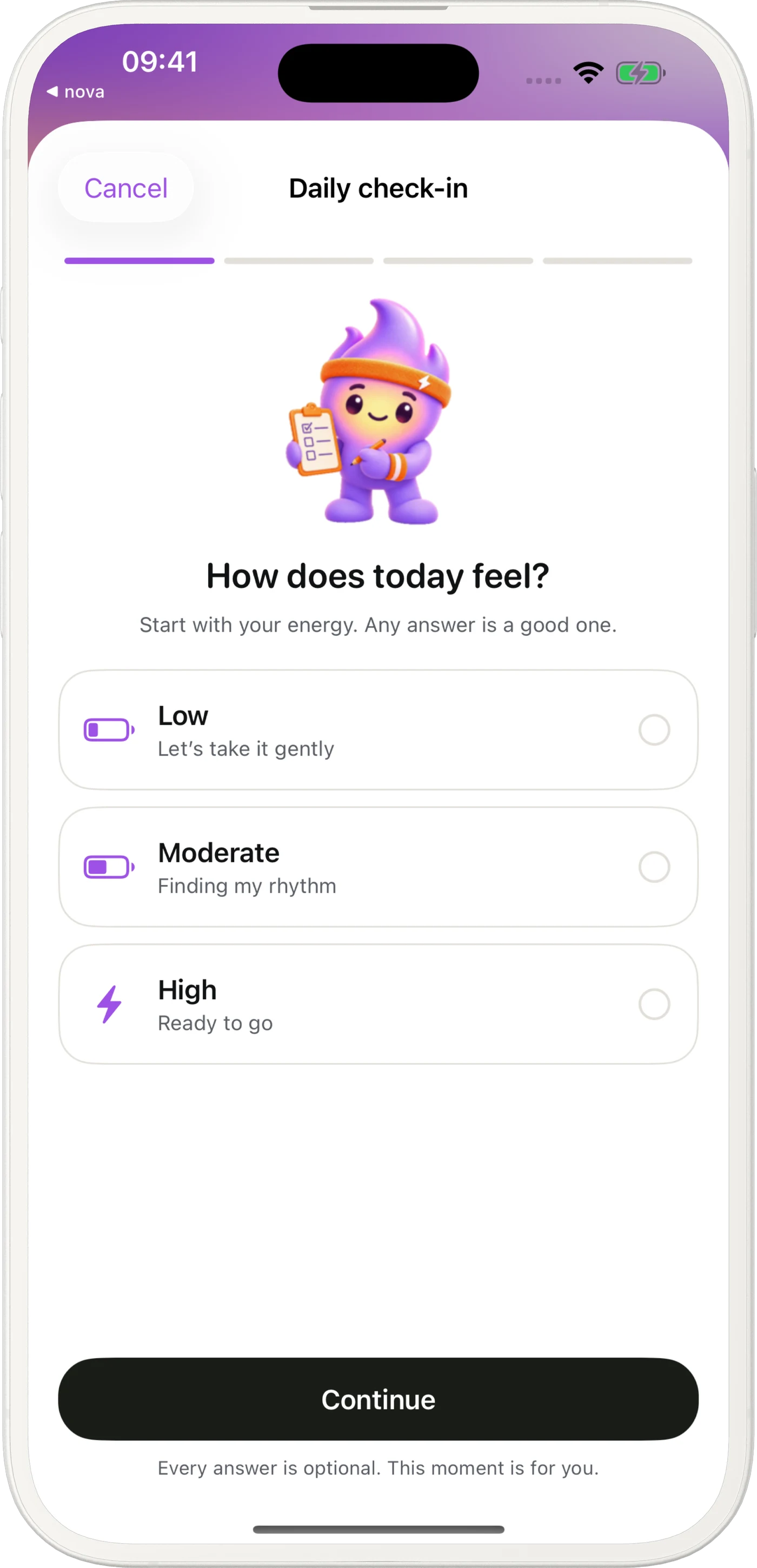
JINVO offers workout planning and guidance. It is not medical care, nutrition counseling, or a way to manage a medicine. The sources above are published research and guidance. None of them endorses JINVO, and JINVO’s suggestions have not been clinically validated.
Want to see how JINVO plans and records your training? Explore how JINVO works. JINVO is coming soon for iPhone with iOS 26 or later. Coaching will require a subscription, with local prices shown in the app.
Frequently asked questions
Can strength training help me keep muscle while losing weight?
Research reviews report that resistance-type exercise helps attenuate or prevent muscle loss during weight loss. That does not guarantee a result for you. Ask your clinician what kind of training suits your health.
Is it safe to strength train on a GLP-1 medicine?
It depends on your health, your medicines, and how you feel. A joint advisory recommends pairing GLP-1 treatment with a structured exercise program, but it is written for clinicians. Ask your prescriber or clinician before you start or change your training.
How much protein do I need to keep muscle?
The right amount depends on your body, your goals, and your health, so this article does not give a number. A review in Advances in Nutrition found that high protein intake helps preserve lean mass during weight loss but could have adverse effects on metabolic function. A registered dietitian can tailor an amount to you.
How often should I strength train while losing weight?
The CDC recommends muscle-strengthening activity on at least two days a week for adults, covering all major muscle groups. Your clinician can adjust that for your situation.
Sources & editorial notes
- Laverde et al. — GLP-1 receptor agonists at doses for obesity management and muscle health (International Journal of Obesity, 2026)Systematic review and meta-analysis of seven randomized trials (821 patients) versus placebo. It did not test exercise programs, and results varied widely between trials.
- Nutritional Priorities to Support GLP-1 Therapy for Obesity — joint advisory (American Journal of Lifestyle Medicine, 2025)From the American College of Lifestyle Medicine, American Society for Nutrition, Obesity Medicine Association, and The Obesity Society. Written for clinicians; not individual advice.
- Cava, Yeat, Mittendorfer — Preserving Healthy Muscle during Weight Loss (Advances in Nutrition, 2017)Review of diet-induced weight loss. It does not cover GLP-1 medicines.
- ACSM — Top fitness trends for 2026Published October 22, 2025. A survey-based trend forecast of 2,000 professionals, not a clinical guideline.
- ACSM — 2026 Resistance Training GuidelinesMarch 17, 2026 summary for healthy adults. It does not address weight loss or medicines.
- CDC — Adult Activity: An OverviewMuscle-strengthening and aerobic activity recommendations for adults. Page last reviewed December 20, 2023.
- JINVO — Product overviewFirst-party information about planning, check-ins, and availability.
Published October 2, 2026 by JINVO Editorial. External sources checked on this date. JINVO publishes these guides as the app’s developer; product descriptions are first-party information, not independent reviews. Examples and illustrations are not research results.
General educational guidance for adults. For pain, injury, or questions about exercise suitability, consult a qualified healthcare professional. A qualified trainer can help you learn unfamiliar movements.