Start strength training with two days a week
A practical way to build your first strength-training routine: choose two repeatable days, keep a useful workout log, and make room for recovery.
 JINVO EditorialTraining & product guides
In this article
Why start with two days?
A new routine has to fit an ordinary week, including the busy parts. Before choosing exercises, look at your calendar. Which two windows could you protect without reorganizing your whole life? Write those down first. A routine that exists only in an ideal week is hard to repeat.
The CDC recommends muscle-strengthening activity on at least two days each week, covering all major muscle groups. This sits alongside aerobic activity: at least 150 minutes of moderate-intensity activity, 75 minutes of vigorous activity, or an equivalent combination. Two lifting sessions are the strength component, not the entire activity recommendation.
You do not need to solve every training variable on day one. The ACSM’s 2026 resistance-training guidance emphasizes regular participation and an approach that fits the individual. Bodyweight, bands, and home-based training can all be useful options. The equipment you can actually access is a good place to begin.
Give each session a place in your week
For example, reserve Monday and Thursday for full-body training. The days in between leave room for recovery and other activity. Treat this as a calendar template, not a personalized exercise prescription. Shift the days to fit your work, family, and energy.
Also choose a backup window. If Monday disappears, knowing where the session can move saves another decision. Avoid treating a missed workout as a debt that has to be repaid with extra sessions. Revisit the calendar and pick the next realistic opportunity.
Keep the first sessions familiar
Start with movements you know how to perform. If you are unfamiliar with strength exercises, a qualified trainer can help you learn technique and choose suitable variations. A full-body routine should cover the major muscle groups rather than only the movements you already enjoy.
Write down the exercise, resistance, sets, and repetitions. Use the same exercise names each time so that next week’s notes are easy to compare. Include practical details that matter: which resistance band you used, which machine setting felt comfortable, or whether the room had the equipment you expected.
Pack your training things before the session. Put the plan somewhere easy to open. Give your future self fewer decisions to make.
Keep the plan short enough to understand at a glance. If a session repeatedly overruns the time you have, discuss a shorter version with your coach instead of rushing through it. The aim is to build a repeatable process before making it more complicated.
Track what happened, then choose what changes
A useful log describes the workout you actually completed. Record changes as they happen rather than copying the planned numbers afterward. A brief note such as “used the lighter band” makes the next session easier to interpret.
During your weekly review, ask three questions: Did the sessions fit? Which movements need more practice? What made it harder to show up? Those answers might point to a different time of day, an equipment substitution, or a conversation with a trainer about progression.
A completed session is one piece of information. So is a session you shortened. Avoid judging the whole routine from a single day or assuming that every workout must beat the last one. For decisions about increasing resistance or volume, use a plan appropriate to your experience rather than chasing a number on a chart.
Where JINVO fits into the routine
JINVO is designed to build a training plan around your goals, experience, available equipment, and schedule. Daily check-ins give your coach energy and recovery context, while weekly reviews help you look back at completed training and see what is coming next.
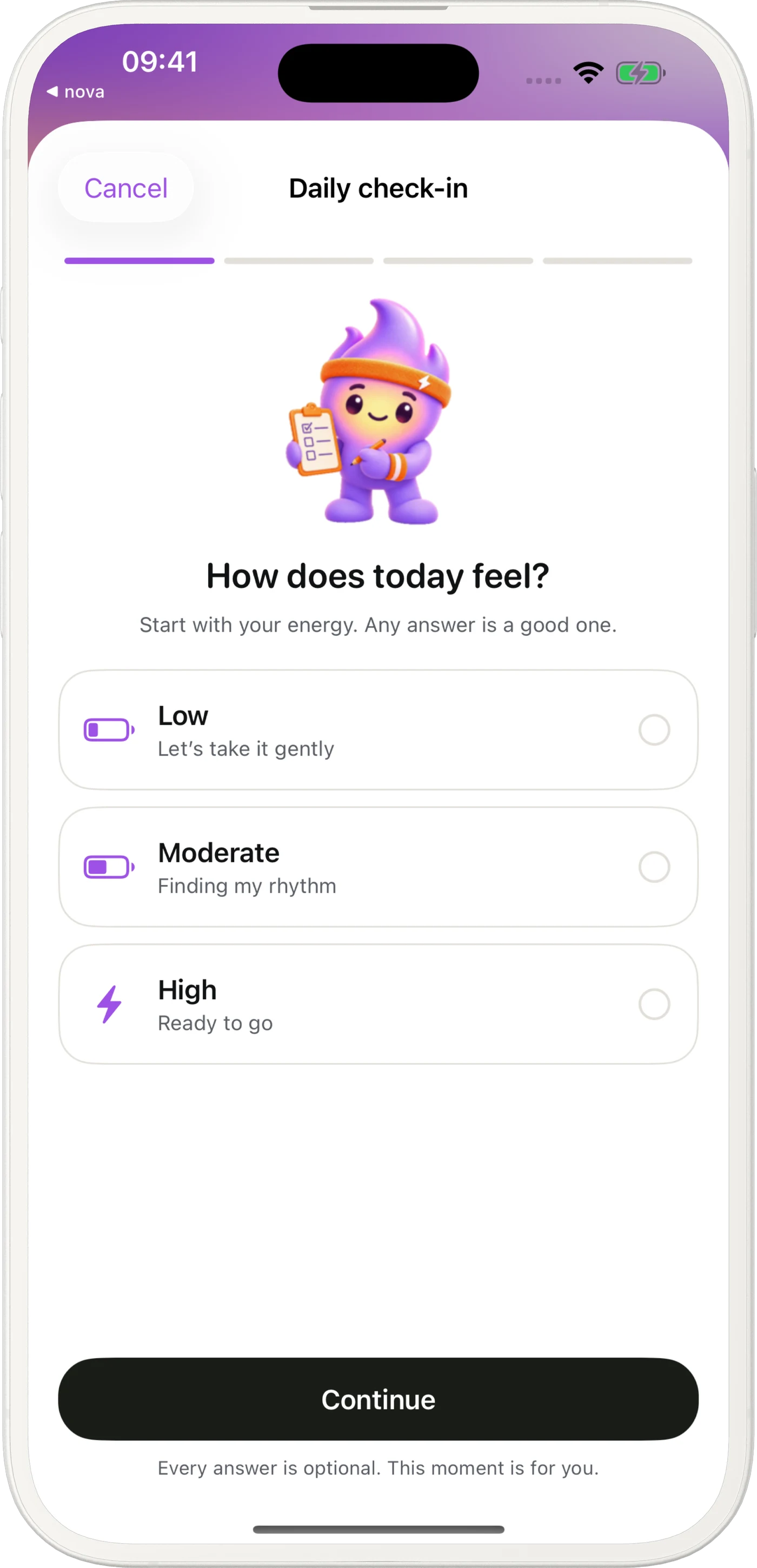
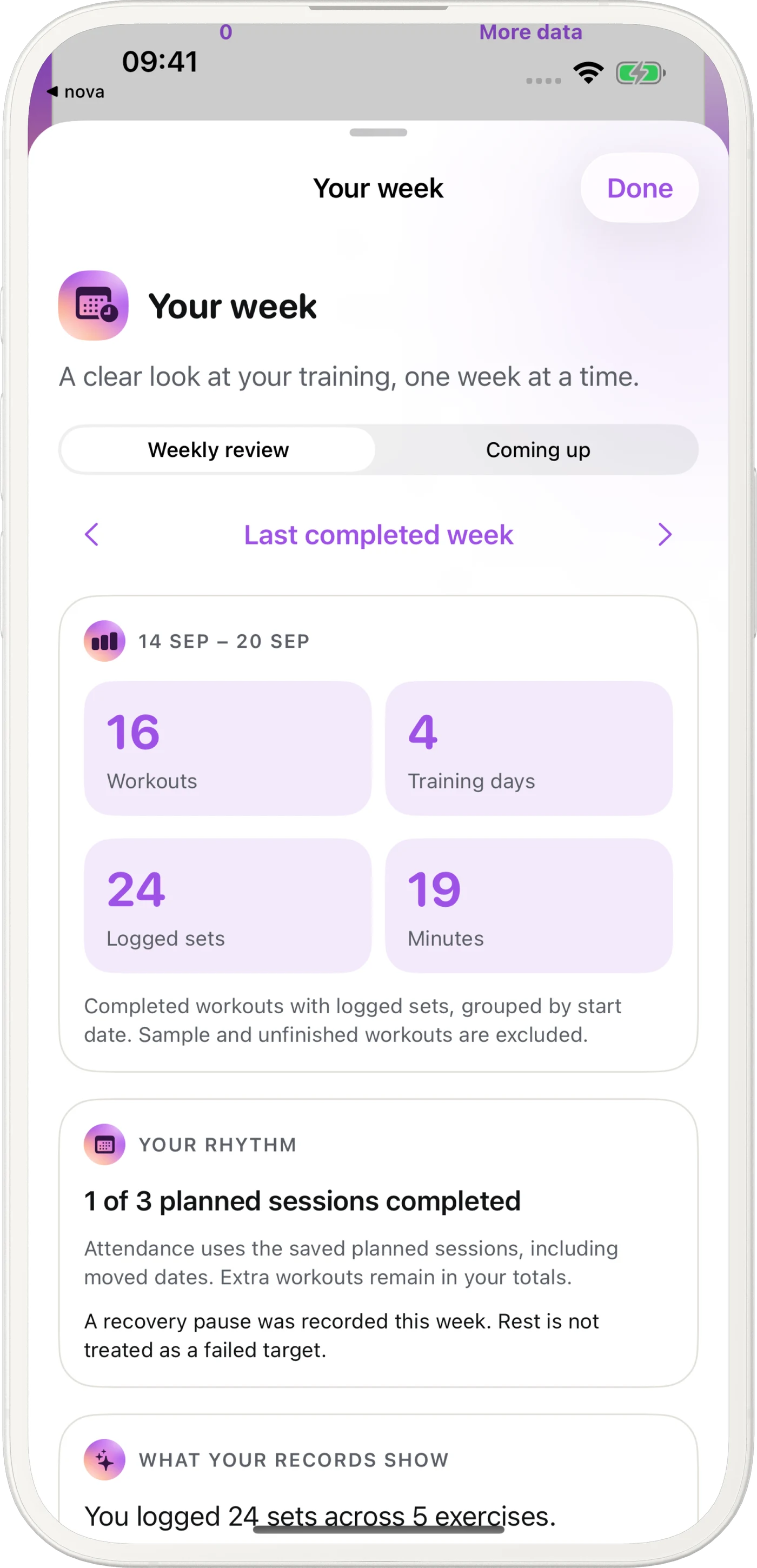
Spark, your training companion, also appears in Home Screen widgets that show your training rhythm. The role is a small reminder to return to your routine. Your check-in and workout history provide context; they are not a medical assessment.
JINVO is coming soon for iPhone with iOS 26 or later. Coaching will require a subscription, with local prices shown in the app. Read what an AI workout coach can and cannot do before deciding how it fits your training.
Frequently asked questions
Is twice a week enough to start strength training?
Two days a week is a useful starting frequency for many healthy adults and aligns with the CDC’s minimum muscle-strengthening recommendation when all major muscle groups are covered. The right routine still depends on your goals and circumstances.
Do I need a gym to start?
No. Resistance training can use bodyweight, bands, or weights at home as well as gym equipment. Choose exercises and resistance suited to your ability, and get help learning unfamiliar movements.
What if I miss a planned workout?
Choose the next realistic training window and review why the original one did not fit. Adjust the schedule if the same conflict keeps happening, rather than automatically adding extra work to the next session.
Sources & editorial notes
- CDC — Adult Activity: An OverviewPublic-health recommendations for aerobic and muscle-strengthening activity.
- ACSM — 2026 Resistance Training GuidelinesGuidance for healthy adults on consistency, individualization, and equipment options.
Published September 24, 2026 by JINVO Editorial. External sources checked on this date. JINVO publishes these guides as the app’s developer; product descriptions are first-party information, not independent reviews. Examples and illustrations are not research results.
General educational guidance for adults. For pain, injury, or questions about exercise suitability, consult a qualified healthcare professional. A qualified trainer can help you learn unfamiliar movements.