Strength training guidelines 2026: build a balanced week
What ACSM’s 2026 update and WHO activity guidance mean for your weekly routine, exercise choices, and the workout planning we are developing at JINVO.
 JINVO EditorialTraining & product guides
In this article
Two sources, two useful questions
When you open a workout plan, it is easy to focus on the exercise list. Which squat? How many exercises? What comes next? There is another question worth asking first: what is this week supposed to help you do?
The ACSM update published in March 2026 summarizes a position stand for healthy adults, drawing on 137 systematic reviews and more than 30,000 participants. It addresses resistance training. The WHO Europe physical activity fact sheet, dated September 2021, describes the wider activity recommendations.
These are different kinds of resources: a summary of an evidence review and a public-health fact sheet. Neither is a study of JINVO. We are using their guidance to inform the workout planning we are developing as we expand the app’s exercise library.
What belongs in a balanced week?
For adults aged 18–64, WHO recommends the following weekly activity. The fact sheet also includes guidance for other age groups and circumstances; this table focuses on the adult recommendations.
| Part of the week | Recommendation |
|---|---|
| Aerobic activity | 150–300 minutes at moderate intensity, or 75–150 minutes at vigorous intensity, or an equivalent combination. |
| Muscle-strengthening activity | All major muscle groups at moderate or greater intensity on two or more days. |
Use this as a weekly reference when reviewing your calendar. Keep the strength sessions visible and make room for aerobic activity too. The WHO fact sheet includes walking and cycling within physical activity; intensity matters when counting time toward the aerobic recommendation.
“Where does movement already fit in my day, and which sessions still need a place?” Start with your real calendar before adding another commitment.
What the 2026 strength-training update changes
ACSM emphasizes regular participation and tailoring training to the person. Bands, bodyweight, and home-based routines can be effective options. Its summary also reports that training to failure and complex periodization did not consistently change outcomes for the average healthy adult. Load and training volume still matter, with different choices suited to strength, muscle growth, and power goals.
For your next planning conversation, turn that into concrete questions: what is my main goal, what equipment can I reliably use, and what can I repeat in an ordinary week? Write the answers beside the routine. They give you a way to assess a suggested change instead of choosing it simply because it looks new.
If you are beginning, our two-day strength-training guide helps you find space in your calendar. If time is the immediate constraint, see our guide to planning a short home session.
More exercise choices should solve a practical problem
A larger exercise library is useful when it helps answer a real constraint. Perhaps your usual machine is occupied. Perhaps you are travelling with a resistance band. Perhaps a suggested movement is unfamiliar and you need a different option to discuss with your coach.
That is the purpose behind expanding JINVO’s exercise choices. We want the planning experience to have more appropriate options for different equipment, experience, and schedules. Adding exercises is part of that development work; the size of a library alone says little about the quality of a plan.
| Your situation | Useful question for your coach |
|---|---|
| The equipment is unavailable | What option fits the equipment I actually have and the purpose of this session? |
| The movement is unfamiliar | Can we use a familiar option while I arrange help learning this one? |
| My schedule has changed | Which parts should we prioritize within the time available? |
| The exercise or load changes | What should I record so the next session is easy to compare? |
Keep substitutions visible in your log. “Used a band today” is more useful than copying the numbers from the original plan. Different exercises and equipment do not necessarily translate to equivalent loads, so record the actual variation.
Review the week before adding complexity
At the end of the week, compare your plan with what happened. Which session fit easily? Which one kept moving? Did an equipment problem cost you time? Those details help you separate a calendar problem from an exercise-selection problem.
Choose one concrete adjustment to discuss. That might mean moving a session, preparing equipment earlier, or asking for a shorter version of a workout. Keeping a brief reason beside the change makes the following review easier: you can see whether it solved the problem you actually had.
Learning technique, managing an injury, and deciding whether exercise is suitable for a medical condition require appropriate professional support. A general guideline and an app conversation cannot assess those individual needs.
How this informs the JINVO we are building
We are using ACSM and WHO guidance as reference points while improving JINVO’s workout planning and adding more exercises. Our development aim is to connect the plan to the person: their goal, training experience, available equipment, and schedule.
JINVO’s coaching conversations, daily check-ins, and weekly reviews are designed to keep that context close to the training record. Sharing that your week changed should give the conversation a clearer starting point.
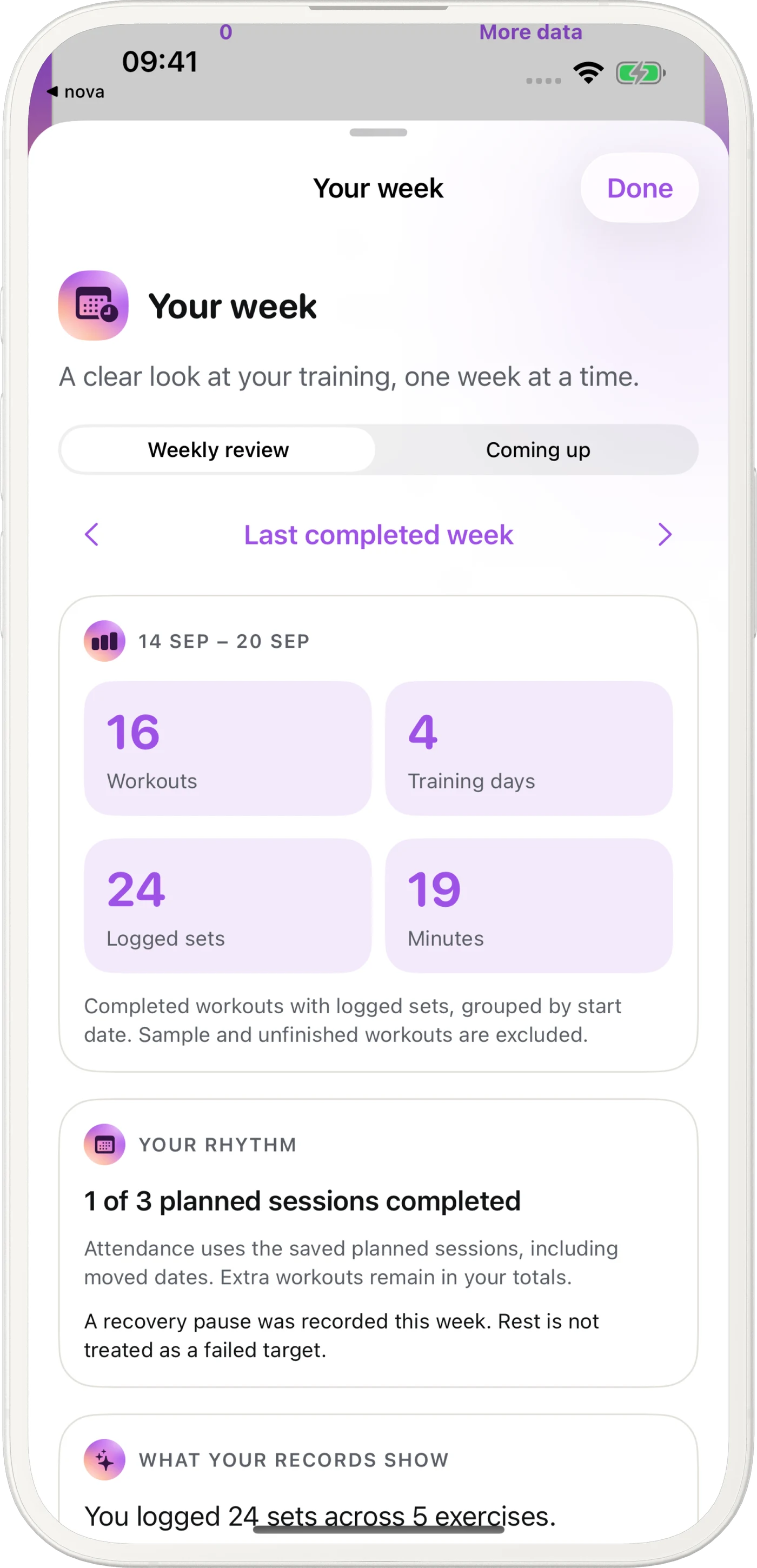
Using published guidance does not mean that ACSM or WHO endorses JINVO, or that the app’s outcomes have been clinically validated. It describes the references informing our development decisions.
Want to see how those ideas fit the product? Explore JINVO’s approach to workout planning and coaching. JINVO is coming soon for iPhone with iOS 26 or later. Coaching will require a subscription, with local prices shown in the app.
Frequently asked questions
Do the 2026 ACSM guidelines replace WHO activity recommendations?
They have different scopes. ACSM’s update addresses resistance training for healthy adults; WHO describes broader physical activity recommendations. Use the sources together when thinking about your week.
Does a bigger exercise library mean I should change exercises every workout?
A bigger library gives a planner more options. In JINVO’s development, the aim is to support practical choices around equipment, experience, and schedule. An exercise change should have a clear reason you can discuss and record.
Are ACSM or WHO endorsing JINVO?
No endorsement is claimed. JINVO is using these published resources to inform ongoing workout-planning development. The sources do not evaluate or validate the app.
Sources & editorial notes
- ACSM — 2026 Resistance Training GuidelinesMarch 17, 2026 summary of the resistance-training position stand for healthy adults.
- WHO Europe — Physical activitySeptember 1, 2021 fact sheet. Weekly activity recommendations; not a new 2026 study.
Published September 26, 2026 by JINVO Editorial. External sources checked on this date. JINVO publishes these guides as the app’s developer; product descriptions are first-party information, not independent reviews. Examples and illustrations are not research results.
General educational guidance for adults. For pain, injury, or questions about exercise suitability, consult a qualified healthcare professional. A qualified trainer can help you learn unfamiliar movements.