20-minute strength training at home: make it fit
Only have 20 minutes? Learn how to plan a short strength workout at home, choose familiar movements, and keep a useful record for next time.
 JINVO EditorialTraining & product guides
In this article
Is 20 minutes of strength training enough?
You find a gap before dinner. It is not long enough for a trip to the gym, but the dumbbells are right there. Is it worth starting? A short session can give you a practical way to keep training in a busy week. It does not have to become a race to squeeze in every exercise you know.
There is no universal number of minutes that makes a strength workout effective. The ACSM’s 2026 resistance-training guidance emphasizes consistency and training that fits the individual. It also recognizes home-based training, bands, and bodyweight as useful options. You do not need a complicated setup to begin.
Think about the week as well as the session. The CDC recommends muscle-strengthening activity on at least two days a week, covering all major muscle groups, alongside aerobic activity. A short lifting session contributes to that routine; its duration alone does not tell you whether you have covered it.
Give the 20 minutes a simple shape
Choose the exercises before your workout window opens. Set out the equipment and decide which movements matter most today. Scrolling for a new routine halfway through uses time you meant to spend training.
| Time | What to make room for |
|---|---|
| First 4 minutes | Ease into movement and rehearse your planned exercises with an easier variation or lighter resistance. |
| Next 14 minutes | Complete your chosen exercises with controlled repetitions and enough rest to repeat them well. |
| Final 2 minutes | Finish comfortably, record your work, and note what to adjust next time. |
This is a way to budget time, not a tested workout prescription. Some movements or people need more preparation and rest. If your warm-up takes longer, reduce the work you planned. The timer should never decide whether you are ready for another set.
Leave the plan open beside your mat. One clear next step is more useful than ten saved workouts you still need to choose between.
Choose familiar movements for the equipment you have
A home session can use dumbbells, resistance bands, or bodyweight. Pick variations you already know how to perform. A qualified trainer can help you learn unfamiliar movements and build a routine that covers your major muscle groups across the week.
| Movement | Example at home | Planning detail |
|---|---|---|
| Squat | Sit-to-stand or a dumbbell goblet squat | Choose a variation you can control comfortably. |
| Hip hinge | Dumbbell Romanian deadlift | Learn the movement before adding resistance. |
| Push | Wall push-up or dumbbell floor press | Use a stable setup with enough clear space. |
| Pull | Supported dumbbell row | Allow time for both sides and changing position. |
These are examples, not a requirement to fit every row into one session. Use the sets, repetitions, and rest from a plan suited to your experience. If you already have a routine, choose a shorter version with your coach instead of compressing the whole thing. Fewer planned sets can be a more realistic adjustment than hurrying through all of them.
One pair of dumbbells may feel very different across exercises. Do not assume a weight that suits your squat also suits your press. Mention the actual equipment and available weights when asking for a plan.
Make the session shorter without making it frantic
The easiest minutes to save are often outside the sets. Keep equipment nearby, use a clear exercise order, and avoid unnecessary setup changes. Give yourself space to move without stepping around furniture or loose weights.
Do not turn every strength workout into a timed circuit just to finish faster. Rest is part of the session. If the next set would be rushed, finish fewer sets and record that honestly. A workout log is useful because it describes what happened, including the days when the plan was too ambitious.
When the same session repeatedly overruns, change the plan. You might need fewer exercises, a simpler setup, or a longer window on another day. Pain is a reason to stop and seek appropriate advice, not a signal to beat the timer.
Keep enough detail to make the next session easier
Record the exercise variation, resistance, sets, and repetitions. Add one useful note about time: “setup took five minutes” or “finished the first three exercises.” That gives you something concrete to change next time.
After a week, check whether your short sessions fit the calendar and your wider routine. If you need a starting schedule, read our guide to strength training two days a week. Keep aerobic activity in the picture too; a short strength session does not automatically cover that part of your week.
As training becomes more familiar, review progression with your coach. Adding more exercises is not the only possible change. The useful next step depends on your goal, current workload, technique, and recovery.
Ask for a plan that starts with your real day
A fixed workout cannot know that you have 20 minutes, a pair of light dumbbells, and no bench. Those are exactly the details worth sharing with a coach. JINVO is designed to build training plans around your goals, experience, equipment, and schedule, with voice or text conversations to discuss changes.
“I have 20 minutes at home, including warm-up and rest. I have two 5 kg dumbbells and no bench. Help me shorten today’s session using movements I already know.”
Example prompt. Check the suggested plan; an exact duration or particular response is not guaranteed.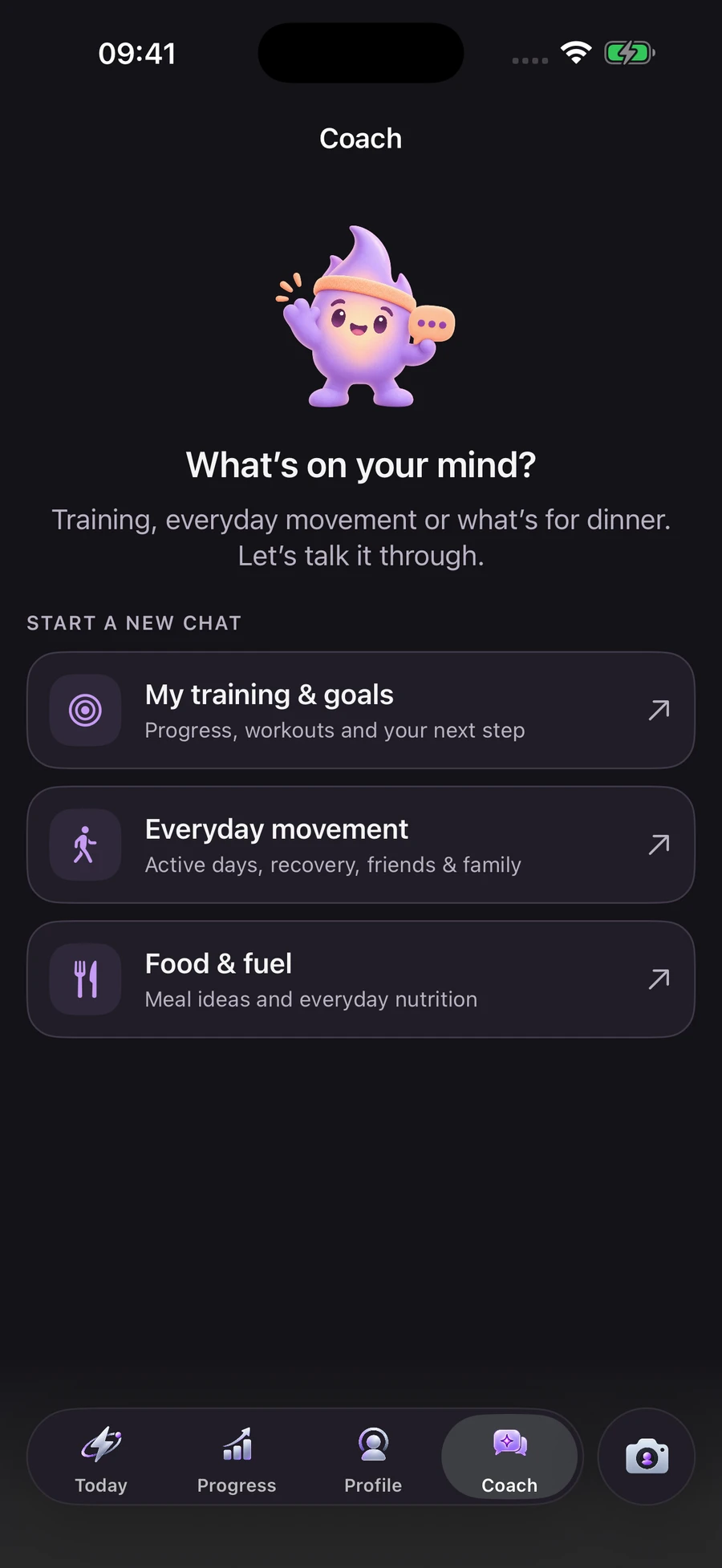
Daily check-ins provide energy and recovery context, while weekly reviews help you look back at completed training. Learn what an AI workout coach can and cannot do before choosing how to use one.
Want help turning the time you have into a repeatable routine? See how JINVO plans and guides your training. JINVO is coming soon for iPhone with iOS 26 or later. Coaching will require a subscription, with local prices shown in the app.
Frequently asked questions
Can a 20-minute strength workout help me build muscle?
It can contribute to a muscle-building routine, but the duration alone does not determine results. Exercise selection, resistance, weekly training volume, progression, and recovery matter. A short session is a time constraint to plan around, not a guaranteed dose for muscle growth.
Can I do a short strength workout without a gym?
Yes. Bodyweight, resistance bands, and dumbbells offer home-training options. Choose familiar exercises that suit your ability and equipment, and make sure your wider routine covers the major muscle groups.
Should I skip rest to finish in 20 minutes?
No. Include rest and preparation in your time budget. If the session does not fit, reduce the planned work or adjust the schedule instead of rushing sets.
How often should I do a 20-minute strength workout?
Plan frequency around your goals and recovery. The CDC recommends muscle-strengthening activity on at least two days each week, covering all major muscle groups. Twenty minutes alone does not establish whether a session or weekly routine meets those needs.
Sources & editorial notes
- ACSM — 2026 Resistance Training GuidelinesGuidance on consistency, individualization, and home-based resistance training; not validation of the illustrative 20-minute template.
- CDC — Adult Activity: An OverviewWeekly muscle-strengthening and aerobic activity recommendations for adults.
- JINVO — Product overviewFirst-party information about planning, coaching, and availability.
Published September 26, 2026 by JINVO Editorial. External sources checked on this date. JINVO publishes these guides as the app’s developer; product descriptions are first-party information, not independent reviews. Examples and illustrations are not research results.
General educational guidance for adults. For pain, injury, or questions about exercise suitability, consult a qualified healthcare professional. A qualified trainer can help you learn unfamiliar movements.